下载客户端
下载客户端
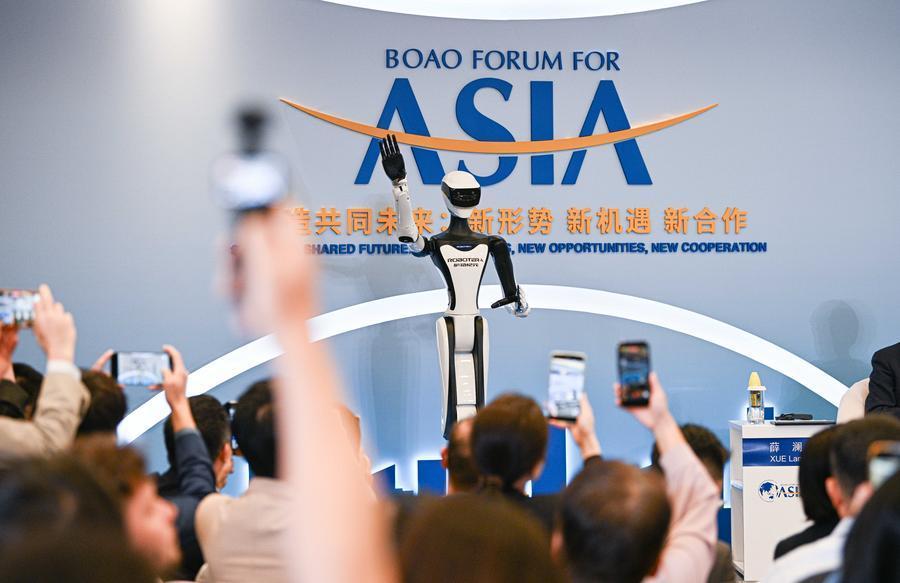 A robot is pictured during the Boao Forum for Asia (BFA) Annual Conference 2026 in south China's Hainan Province, March 25, 2026. (Xinhua/Pu Xiaoxu)
A robot is pictured during the Boao Forum for Asia (BFA) Annual Conference 2026 in south China's Hainan Province, March 25, 2026. (Xinhua/Pu Xiaoxu)
"Beyond regional economic cooperation, we must not lose sight of the multilateral trading system, which is irreplaceable and of self-evident importance in addressing shared global challenges," said Daniel Palotai.
BOAO, China, March 26 (Xinhua) -- As sweeping tariff hikes driven by unilateralism and protectionism fuel mounting global uncertainty, participants at the 2026 Boao Forum for Asia Annual Conference have called for deeper regional cooperation and a stronger multilateral trading system to meet prevailing challenges and consolidate the foundation of global growth.
Wong Kan Seng, former deputy prime minister of Singapore, noted that extensive tariff measures have sent shockwaves across the world.
"These tariffs have eroded the predictability of the operating environment, complicated long-term planning, and undermined mutual trust and partnerships," Wong said, adding that countries are forced to re-evaluate their trading partners, trading modalities, and the potential risks they may face.
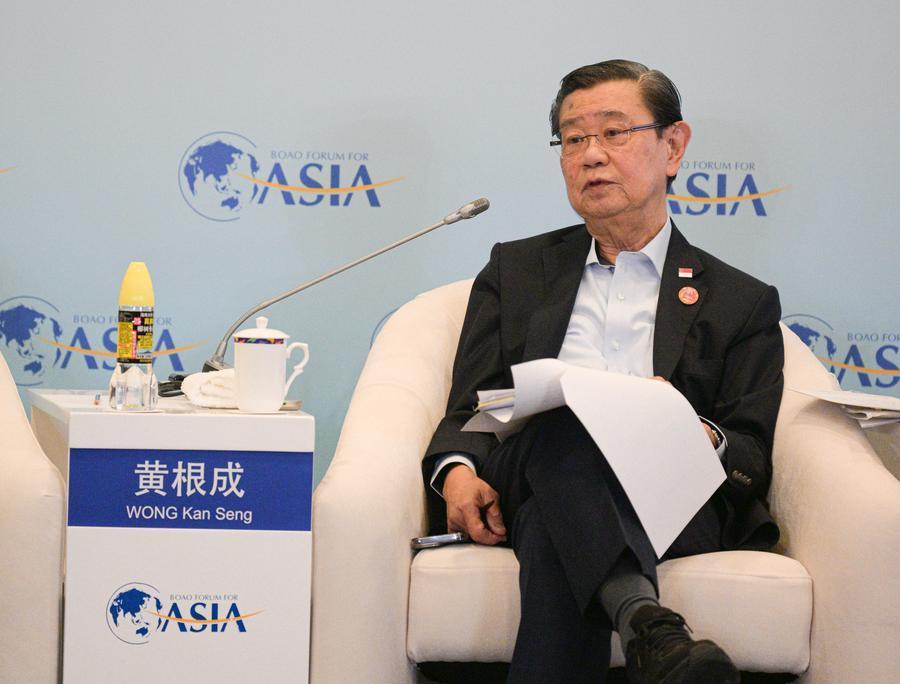 Wong Kan Seng, former deputy prime minister of Singapore, speaks at a panel discussion themed on "Revitalizing APEC: Meeting Challenges and Sharing Opportunities Together" during the Boao Forum for Asia (BFA) Annual Conference 2025 in Boao, south China's Hainan Province, March 26, 2025. (Xinhua/Pu Xiaoxu)
Wong Kan Seng, former deputy prime minister of Singapore, speaks at a panel discussion themed on "Revitalizing APEC: Meeting Challenges and Sharing Opportunities Together" during the Boao Forum for Asia (BFA) Annual Conference 2025 in Boao, south China's Hainan Province, March 26, 2025. (Xinhua/Pu Xiaoxu)
In a turbulent world where tariffs are increasingly weaponized, "a worrying trend has emerged: global trade is increasingly based on force and coercion, rather than rules," said former Prime Minister of Italy and European Commissioner for Economy Paolo Gentiloni.
Daniel Palotai, deputy governor of Hungary's central bank Magyar Nemzeti Bank, warned that tariff measures will distort and fragment the economy, inflicting lasting harm on economic structures.
Apart from undercutting the predictability of markets and consumer demand for enterprises, tariff hikes have also brought long-term repercussions, including damage to the labor market and inflation, he said.
Robert Koopman, former chief economist of the World Trade Organization (WTO), pointed out that the capricious tariff and regulatory policies of the United States have deepened uncertainty in the business environment, making it extremely difficult for companies to make long-term decisions and formulate development strategies.
Against this backdrop, forum participants agreed that strengthening cooperation and upholding multilateralism are essential and effective ways to offset the negative impacts of tariffs and reinvigorate global growth.
"No country can stay isolated in an uncertain world," Wong stressed, noting that cross-border cooperation remains vital amid the fragmentation of the global trade system.
Citing ASEAN as an example, he said the bloc has maintained unity and coherence despite growing volatility in the global trade and economic landscape.
Gentiloni said cooperation is indispensable to restoring a rules-based trade order, adding that the Boao Forum for Asia serves as a crucial platform for advancing international cooperation.
Palotai noted that tariff hikes have disproportionately affected small economies, and joint efforts are needed to mitigate their adverse effects.
The Regional Comprehensive Economic Partnership (RCEP) stands as a stellar example of how regional solidarity and cooperation can cushion the blow, Palotai said.
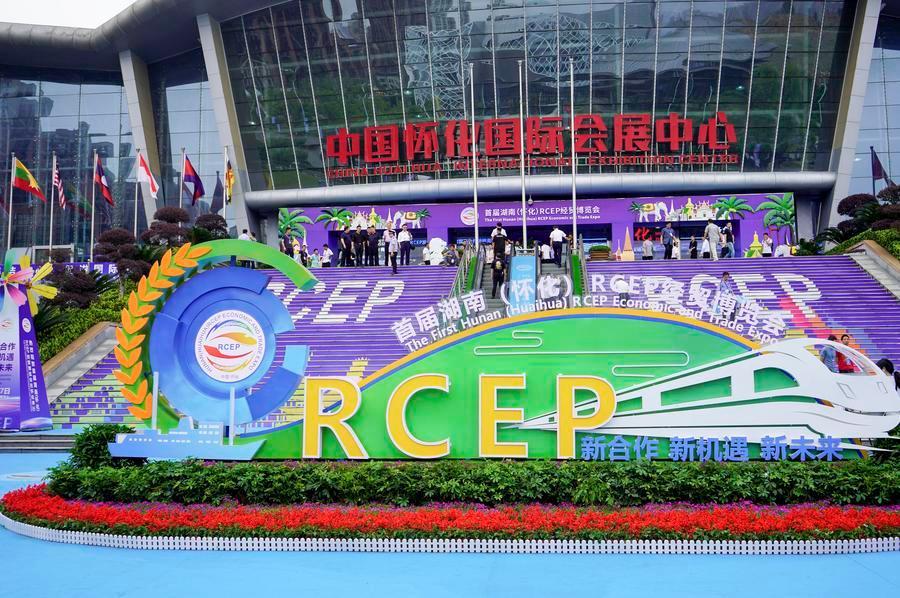 This photo taken on May 5, 2023 shows the venue for the First Hunan (Huaihua) RCEP Economic and Trade Expo in Huaihua City, central China's Hunan Province. (Xinhua/Yu Chunsheng)
This photo taken on May 5, 2023 shows the venue for the First Hunan (Huaihua) RCEP Economic and Trade Expo in Huaihua City, central China's Hunan Province. (Xinhua/Yu Chunsheng)
"Beyond regional economic cooperation, we must not lose sight of the multilateral trading system, which is irreplaceable and of self-evident importance in addressing shared global challenges. I want to highlight the critical role of the WTO," he added.
The forum also saw extensive discussions on China-U.S. relations, a topic widely viewed as pivotal to global economic stability and prosperity.
Li Cheng, professor at the Department of Politics and Public Administration of the University of Hong Kong, said he hopes that the two countries will continue to move forward and sustain dialogue and exchanges.
He stressed that escalating tensions serve no one's interests, adding that despite their differences, both countries value financial stability.
订阅后可查看全文(剩余80%)